
In a modern operating room, technology does more than support the surgical team. Patient infotainment systems have become part of the care environment, giving patients something familiar and reassuring in an unfamiliar setting while giving clinicians a clear, single source of information at the point of care.
These systems bring entertainment, communication, and clinical information together on one screen. For patients, that can mean music, television, or a way to stay in touch with family. For doctors and nurses, it can mean imaging, patient records, and vital signs, all within reach and easy to read. The value is practical, not decorative, and it shows up in both patient satisfaction and clinical workflow.
Comfort and Satisfaction for Patients
Being in an operating room is stressful for most patients, even when the procedure is routine. An infotainment system gives patients a measure of control in a situation where they otherwise have very little. Choosing what to watch or listen to, adjusting the volume, or sending a short message to a family member are small actions, but they help patients feel less like a bystander in their own care.
That sense of comfort matters well beyond the procedure itself. Patients who feel informed and at ease tend to report higher satisfaction, and satisfaction scores are something hospitals now track closely. A calm patient is also easier to care for, which helps the clinical team work without unnecessary interruptions or delays.
Families benefit too. When a patient can communicate easily, or when loved ones can follow along with updates, the experience feels more transparent and less frightening. An infotainment system will not replace a conversation with a nurse or a surgeon, but it fills the gaps between those conversations with something useful and reassuring.
One Source of Information for Doctors
For the surgical team, the benefit is just as important. An infotainment system can put everything the team needs on a single display, including:
- Patient records and checklists, available without leaving the room.
- Imaging and monitoring data, displayed clearly at the point of care.
- Communication tools, so the team can coordinate without searching for a phone or a terminal.
When information lives in one place, doctors spend less time hunting for it and more time using it. That is especially valuable in the operating room, where a delay of a few minutes can change the flow of a procedure. A single, well placed screen reduces clutter, cuts down on trips to a workstation, and keeps the whole team looking at the same information.
Consistency matters as well. When every operating room has the same setup, the team knows where to look and how to find what they need. That familiarity reduces errors and helps new team members get up to speed quickly.
The Support System Behind the Screen
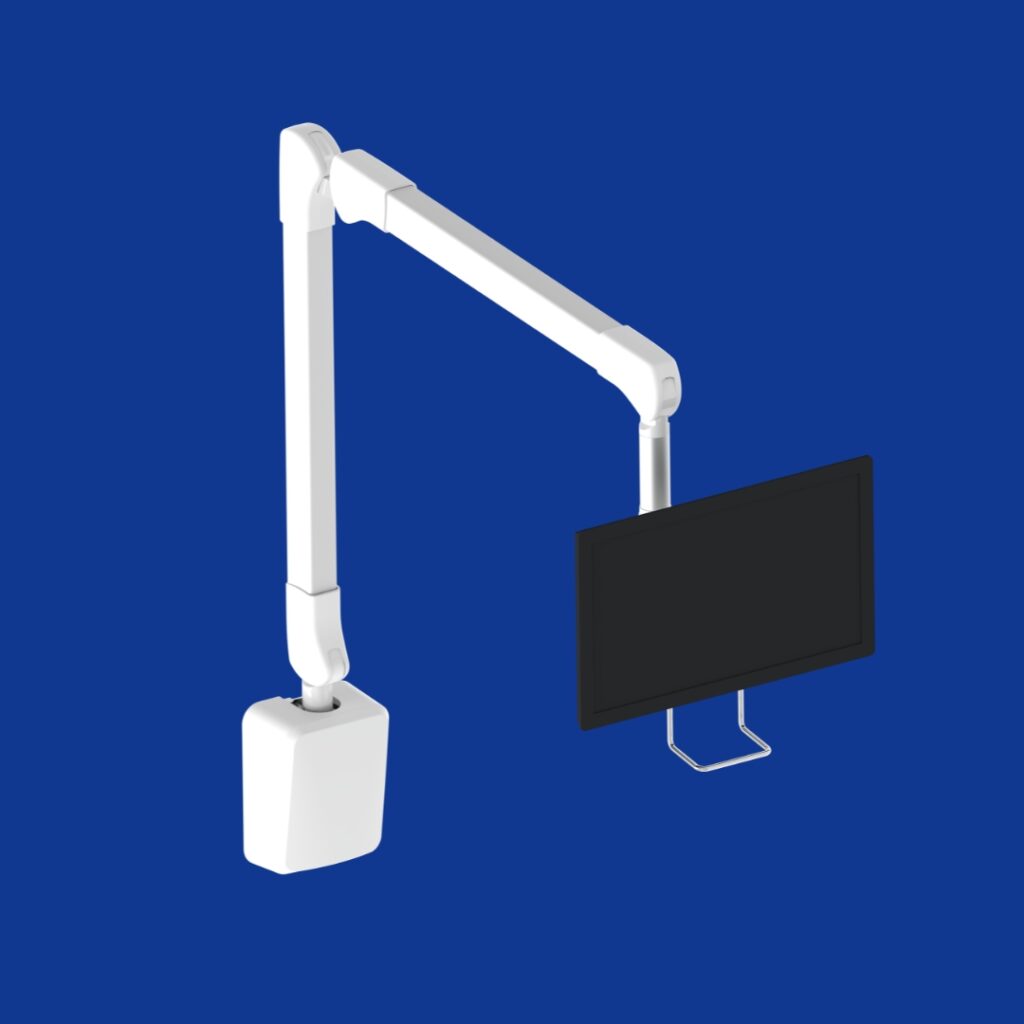
A display is only as good as the arm that holds it. Medical spring arms carry the weight of the screen, keep it exactly where the team positions it, and let staff move it smoothly without force or fuss. In an operating room, that positioning is part of the workflow, not an afterthought, so the arm has to be properly installed, correctly adjusted, and fully functional every time.
Stable Positioning
- A well adjusted spring arm holds the screen steady at the chosen angle and height, even when staff lean in, reposition the patient, or adjust the bed.
Smooth Adjustment
- Movement should be light and controlled. If an arm is stiff, loose, or drifting, staff will waste time fighting it instead of focusing on the patient.
Easy to Clean
- Arms in the operating room should have smooth surfaces and minimal crevices, so they can be wiped down quickly between cases and support infection control routines.
Regular Checks
- Like any piece of equipment, spring arms need periodic inspection. Checking tension, joints, mounting points, and cable routing keeps the arm safe and reliable, and it catches wear before it becomes a problem mid-procedure.
When the support system is right, the screen feels like part of the room. When it is wrong, it becomes a distraction at the worst possible moment.
OASYS Healthcare Patient Entertainment Systems
For hospitals looking to bring this kind of setup into their operating rooms, OASYS Healthcare patient entertainment systems are a strong option, combining patient comfort, clear clinical information, and dependable support hardware in a system built for healthcare environments. OASYS offers several patient entertainment options:
- A-Frame Patient Entertainment: medical support arms engineered for seamless integration with patient entertainment systems, delivering superior comfort, flexibility, and accessibility in healthcare environments.
- Elite Series Patient Entertainment: support arms designed to enhance patient comfort and accessibility.
- 2001 Patient Entertainment: a patient entertainment and infotainment support system designed to enhance patient comfort and accessibility.
With displays that are easy to position and service, and a team that understands what operating rooms demand, OASYS offers a practical way to improve the experience for patients and the workflow for doctors alike. You can explore the full range on the Patient Entertainment page.