OASYS Healthcare Medical Spring Arms Datasheet

Medical Spring Arms Technical Datasheet

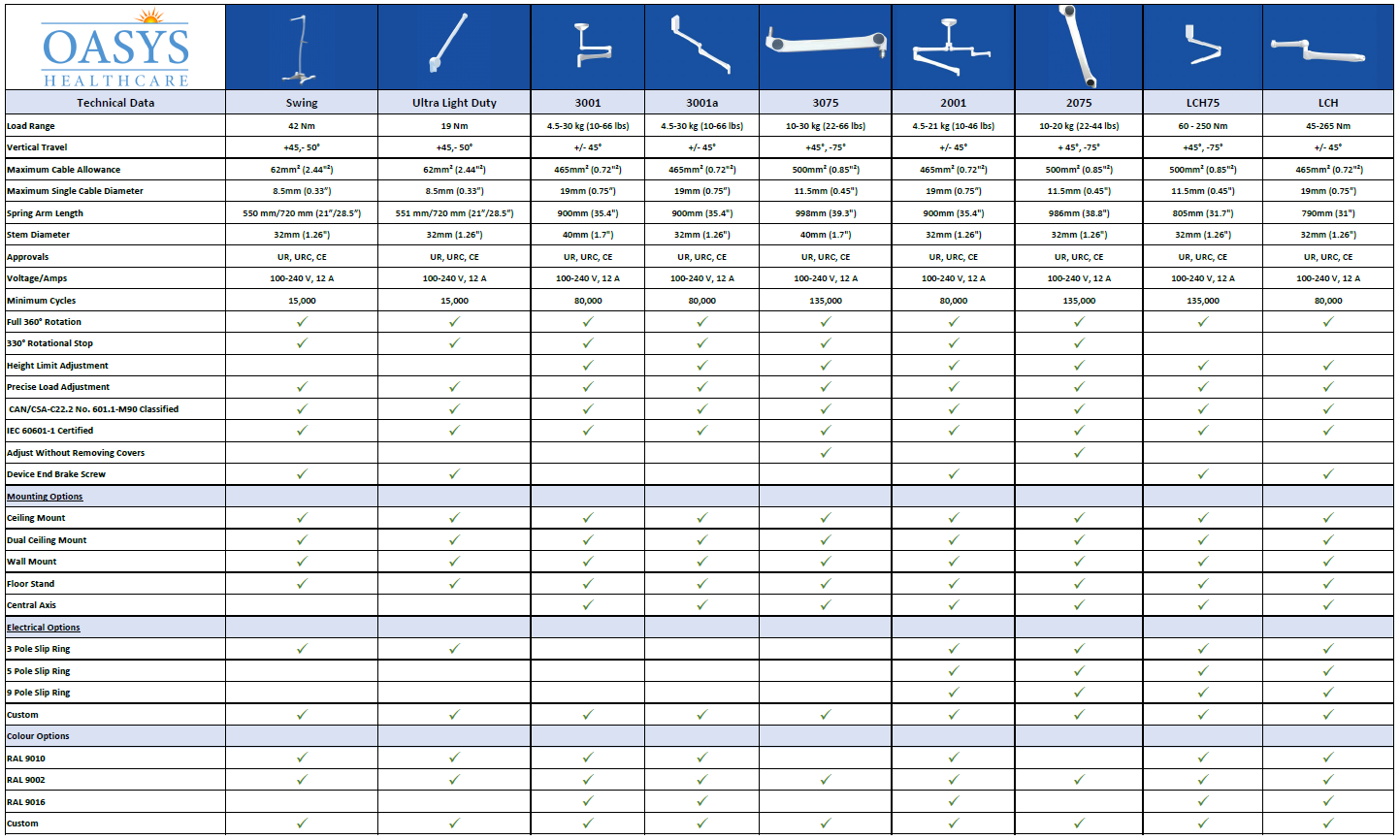
The datasheet provided showcases the technical specifications and options available for all OASYS Healthcare Spring Arms. These systems are designed for applications requiring flexible support and precise positioning of various devices. Below is a closer look at what each section of the table is conveying.
Medical Spring Arms Technical Datasheet


Overview of Suspension Arm Systems

Spring arms are critical components in medical, industrial, and professional environments where devices such as monitors, lights, and instruments need to be precisely positioned and supported. This table details several models, highlighting their technical specifications, certifications, and mounting options, making it easier for professionals to choose the right system for their needs.

Technical Specifications

1. Load Range:
This column indicates the weight capacity each model can support. The range spans from the lightweight Ultra Light Duty (19 Nm) to the heavy-duty LCH models (up to 265 Nm), accommodating different application needs from small instruments to larger, heavier equipment.

The Medium duty product lines like the 3075 and 3001 spring arms can support loads up to 30kg (66 lbs).

2. Vertical Travel:
Describes the angular movement range, crucial for applications needing significant vertical adjustment. Models vary, with some allowing movement from +45° to -75°, providing extensive flexibility.

3. Maximum Cable Allowance and Diameter:
Refers to the cross-sectional area and diameter of the cables these arms can accommodate. This is vital for routing power and data cables through the arms without obstruction. The maximum ranges from 62 mm² in lighter models to 500 mm² in more robust systems.

4. Spring Arm Length and Stem Diameter:
Specifies the length of the spring arm and the diameter of the supporting stem, impacting the reach and stability of the arm. The spring arm length ranges from 550 mm to nearly a meter, while the stem diameters are either 32 mm or 40 mm, ensuring compatibility with various installations.

Certifications and Standards

1. Approvals:
All models are certified under standards such as UR, URC, and CE, ensuring compliance with international safety and performance regulations. This is essential for medical and industrial applications where regulatory adherence is mandatory.

2. IEC and CAN/CSA Certifications:
Indicates compliance with specific international and Canadian standards, enhancing reliability and safety for sensitive environments like medical facilities.

Functional Features

1. Rotation and Adjustment:
Most models offer full 360° rotation, with some also including a 330° rotational stop. Height limit and load adjustments are available in several models, providing precise control over the positioning.

2. Mounting Options:
Flexibility in mounting is crucial for installation in diverse environments. Options include ceiling, dual ceiling, wall, floor stands, and central axis mounts, accommodating various setup requirements.

3. Electrical Options:
Slip ring configurations (3, 5, and 9 pole) allow for the transmission of electrical signals or power, catering to specific electrical needs of the mounted devices.

Customization and Colors

1. Color Options:
Standard colors (RAL 9010, 9002, and 9016) and custom color options are available, allowing the arms to blend seamlessly with different aesthetic and functional settings.

2. Custom Features:
For unique applications, custom configurations are offered, ensuring the suspension arm systems meet specific operational demands.

Conclusion

The table serves as a comprehensive guide for selecting suspension arm systems based on technical requirements, regulatory compliance, and installation preferences. It provides critical information to help professionals make informed decisions for integrating these systems into their setups, ensuring that they get the precise control and flexibility needed for their specific applications. Whether for medical, industrial, or professional environments, understanding these specifications ensures optimal performance and reliability of the suspension systems in use.

Committed to Quality, Committed to You.

Patient Entertainment: Enhancing Comfort and Safety in Healthcare

OASYS Healthcare Patient Entertainment
Introduction

The healthcare landscape is evolving rapidly, driven by technological advancements and an increasing emphasis on patient-centered care. One significant aspect of this transformation is the patient entertainment industry, which has shifted from basic TV sets in hospital rooms to sophisticated, interactive systems designed to improve patient experience and outcomes. This blog post explores the current trends in the patient entertainment industry and the contributions of these trends to making patients’ stays more comfortable and safe.


Trends in Patient Entertainment
Interactive Patient Care Systems:

Modern patient entertainment systems go beyond passive entertainment. They integrate interactive features that allow patients to access educational content about their health conditions, communicate with healthcare providers, and manage their care plans. These systems often include multimedia content, interactive games, and access to the internet, all tailored to enhance patient engagement and satisfaction.

Personalized Content Delivery:

Personalization is a key trend, with systems designed to deliver content that is relevant to individual patients’ preferences and medical needs. This can include customized educational videos, relaxation content, and entertainment options that cater to different age groups and cultural backgrounds.

Mobile Integration:

With the ubiquity of smartphones and tablets, patient entertainment systems are increasingly being integrated with mobile devices. This allows patients to access entertainment and educational content on their personal devices, providing greater flexibility and control over their hospital stay experience.

Virtual Reality (VR) and Augmented Reality (AR):

VR and AR are emerging technologies in patient entertainment, offering immersive experiences that can help distract patients from pain and anxiety. These technologies are being used in various settings, from pediatric wards to adult oncology units, providing therapeutic benefits alongside entertainment.

Telehealth and Remote Monitoring:

The integration of telehealth and remote monitoring features into patient entertainment systems allows for continuous patient engagement and monitoring, even when patients are not in direct contact with healthcare providers. This can enhance patient safety and ensure timely interventions when needed.


The Importance of Patient Entertainment Systems
Enhancing Comfort

Patient entertainment systems play a crucial role in making hospital stays more comfortable. By providing access to a wide range of entertainment options, from movies and TV shows to interactive games and educational content, these systems help distract patients from the stress and anxiety of being in a hospital. This is particularly important for long-term patients and those undergoing painful or stressful treatments.

Improving Engagement

Engagement is a critical factor in patient outcomes. Interactive patient care systems that offer personalized educational content and communication tools can significantly enhance patient engagement. When patients are well-informed about their health conditions and treatment plans, they are more likely to adhere to medical advice and take an active role in their care. This can lead to better health outcomes and higher patient satisfaction.

Promoting Safety

Patient safety is paramount in healthcare, and modern patient entertainment systems contribute to this goal in several ways. By delivering tailored educational content, these systems help patients understand their care plans and follow instructions accurately, reducing the risk of medical errors. Additionally, features such as real-time feedback and communication with healthcare providers ensure that any concerns or issues are promptly addressed, further enhancing patient safety.

Reducing Anxiety and Stress

Hospital stays can be stressful and anxiety-inducing, especially for patients undergoing serious treatments. Entertainment systems that include relaxation content, VR experiences, and access to social media can help reduce anxiety and improve the overall hospital experience. Studies have shown that reducing stress and anxiety can positively impact recovery times and patient outcomes.

Supporting Remote Monitoring and Telehealth

The integration of telehealth and remote monitoring features into patient entertainment systems is a growing trend. These features allow for continuous patient engagement and monitoring, even when patients are not in direct contact with healthcare providers. This can enhance patient safety and ensure timely interventions when needed, improving overall care quality.


The Future of Patient Entertainment
Advanced Personalization:

Future systems will likely offer even more advanced personalization capabilities, using artificial intelligence and machine learning to tailor content and interactions to each patient’s unique needs and preferences.

Increased Interactivity:

The trend towards increased interactivity will continue, with more sophisticated tools for patient education, engagement, and communication. This might include more interactive games, virtual care assistants, and enhanced telehealth features.

Integration with Health Monitoring Devices:

As wearable health monitoring devices become more prevalent, patient entertainment systems will likely integrate with these devices to provide real-time health data and feedback. This can help patients better understand their health status and engage more actively in their care.

Expansion of VR and AR Applications:

The use of VR and AR in patient entertainment will expand, offering new ways to manage pain, reduce anxiety, and provide immersive educational experiences. These technologies have the potential to transform the patient experience, particularly in pediatric and long-term care settings.

Greater Focus on Mental Health:

Future patient entertainment systems will place a greater emphasis on mental health, offering content and tools designed to support emotional well-being. This might include mindfulness exercises, therapeutic games, and access to mental health resources.


Conclusion

The patient entertainment industry is rapidly evolving, driven by technological advancements and an increasing focus on patient-centered care. By providing interactive and personalized experiences, these systems are not only making hospital stays more bearable but are also contributing to better health outcomes and higher patient satisfaction. As the healthcare landscape continues to evolve, the role of patient entertainment systems will become increasingly important, helping to create a more engaging, supportive, and safe environment for patients.

In summary, the integration of advanced technology in patient entertainment systems represents a significant step forward in enhancing patient care. These systems not only provide comfort and distraction but also play a crucial role in patient education, engagement, and safety. As we look to the future, continued innovation in this field promises to further improve the patient experience and contribute to better health outcomes.

Committed to Quality, Committed to You.